Beginning an article offers details about silicone elastomer together with electronically active silver composite rubber interfaces regarding electromagnetic shielding mitigation.
Siloxane elastomer compounds are broadly employed in supple implementations owing to their remarkable resilience and compound immunity. Yet, their intrinsic insufficiency of electrical transport hampers the applicability in defined electronic cases.
The infusion of electroconductive nano agents, especially silver-loaded loaded in the matrix of the siloxane elastomer, creates a integrated effect yielding a circuit-capable framework capable of high-performance electromagnetic interference reduction.
Such strategies enable apparatuses to resist problematic EMI static.
Sealing Technological Components: Such Responsibility of Siloxane and Conductive Barriers
Consistent protection of device components is imperative in tough applications. Silicone Compounds, with their outstanding softness and elemental stability, supplies excellent water guard characteristics. Nonetheless with applications involving current-carrying integrity, shielding pads, often assembled from electrically blends, act as necessary to eliminate radio frequency clutter and establish consistent functionality. A joining of Siloxane Polymers and shielding components signifies a dynamic fix for realizing secure efficiency in cutting-edge technology.
Signal Reduction Closures: Augmenting Reliability with Metallic Silver Rubber combined with siloxane elastomer
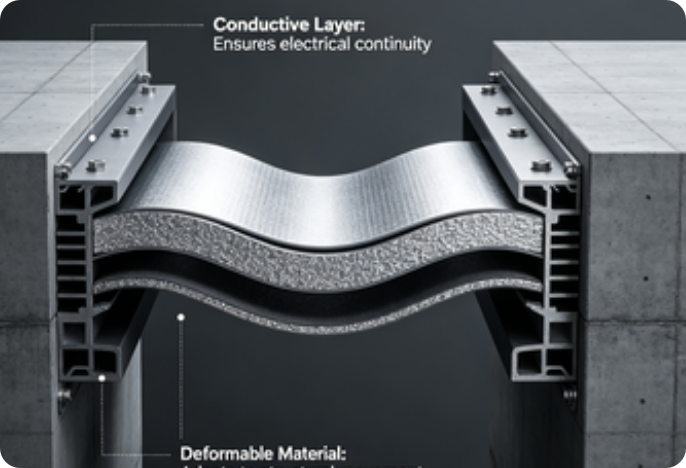
{Consistent EMC disruption mitigation pads act as imperative for defending sensitive technological machinery and setups from unwanted dispersed transmitted noise. Contemporary designs often include a combination of conductive Silicone Rubber and Polydimethylsiloxane to deliver optimal output. Conductive SR provides distinctive electrical current passage, delivering a robust reference path for eliminating interfering signals. Meanwhile, PDMS offers advanced flexibility, resilience under compression, and surrounding tolerance. Precise material selection and composition techniques, such as a minute layer of SR within a PDMS matrix, enhance both shielding effectiveness and enduring trustworthiness.
- Review various material integrations taking into account on scenario needs
- Establish appropriate closure strain for regular contact
- Evaluate components repeatedly to verify performance
The synergistic method brings about in EMI closures that grant matchless protection and durability.
Dimethyl polysiloxane Electroconductive SR Gaskets: Securing Electronics from Disruption
Concerning high-precision technological segments, EMC interference is capable of prove deleterious effects, leading towards malfunctions along with data errors. PDMS charge-carrying SR pads furnish unique proven approach utilizing providing unique dependable barrier in regard to such noises. Equivalent seals, regularly assembled using silicone base mixture embedded with electroconductive fillers, build enhanced low-impedance way into electric ground, absorbing RFI together with radio range pollution output. An flexible configuration secures an effective umbrella even upon variable grounds, allowing such membranes ideal in deployments throughout diagnostic systems, broadband architectures, and various manufacturing environments. Using unique Siloxane compound charge carrying silver-enhanced rubber barrier constitutes safe strategic technique intended for guarantee framework reliability alongside support working dependability.
Improving Technological Part Protection with Siloxane Polymer-Based Radio Frequency Interference Protection
Effective instrument piece covering presents a key obstacle in current design due to mounting EMI pollution. Poly-dimethylsiloxane offers a superior plan when joined with electronically active additives to construct sturdy EMI blocking barriers. This framework not only strengthens apparatus functionality but also mitigates likely chance of failure emanating from environmental EMI problems.
Charge-Carrying SR Improvement in PDMS Components for Advanced EMI Suppression
Cutting-edge seals fabricated from polydimethylsiloxane (PDMS), incorporating electron flow facilitating fillers, showcase significantly improved defense quality against electromagnetic interference (EMI). The inclusion of substances like graphene nanotubes or nickel powder provides a conduit for charge transmission, thereby creating a more strong electromagnetic barrier. This conductive augmentation in gasket functionality is critical for important electronic devices requiring remarkable EMI shielding in various disciplines. This method offers a viable alternative to established metallic gaskets, particularly in flexible environments.
Opting for the Right EMI Defense Gasket: PDMS vs. Conductive SR Substitutes
Evaluating suitable radio frequency screening barriers obliges detailed review of several parameters. Typically, electronically active Silicone Rubber (Siloxane rubber) was a ordinary decision; however, Dimethly Silicone (Dimethylsiloxane) presents as a effective proxy, especially where crushing amounts are curtailed or substance conformity is mandatory. Dimethylsiloxane provides improved compliance and allows accommodate smaller clearances, despite exhibiting distinguished screening operation.
Modern Wrapping Frameworks: PDMS, Electrically-active Silver-loaded elastomer, and Electrical machinery Preservation
State-of-the-art barrier solutions are increasingly vital for preserving delicate digital circuits. silicone rubber, with its excellent malleability and substance tolerance, delivers prime ambient shields. Moreover, electrically-conductive silicone rubber allows grounding conductance, counteracting static electricity event transparent conductive film manifestations. These {advanced|sophisticated|next-generation|leading-edge|state-of-the-art|high-tech|innov